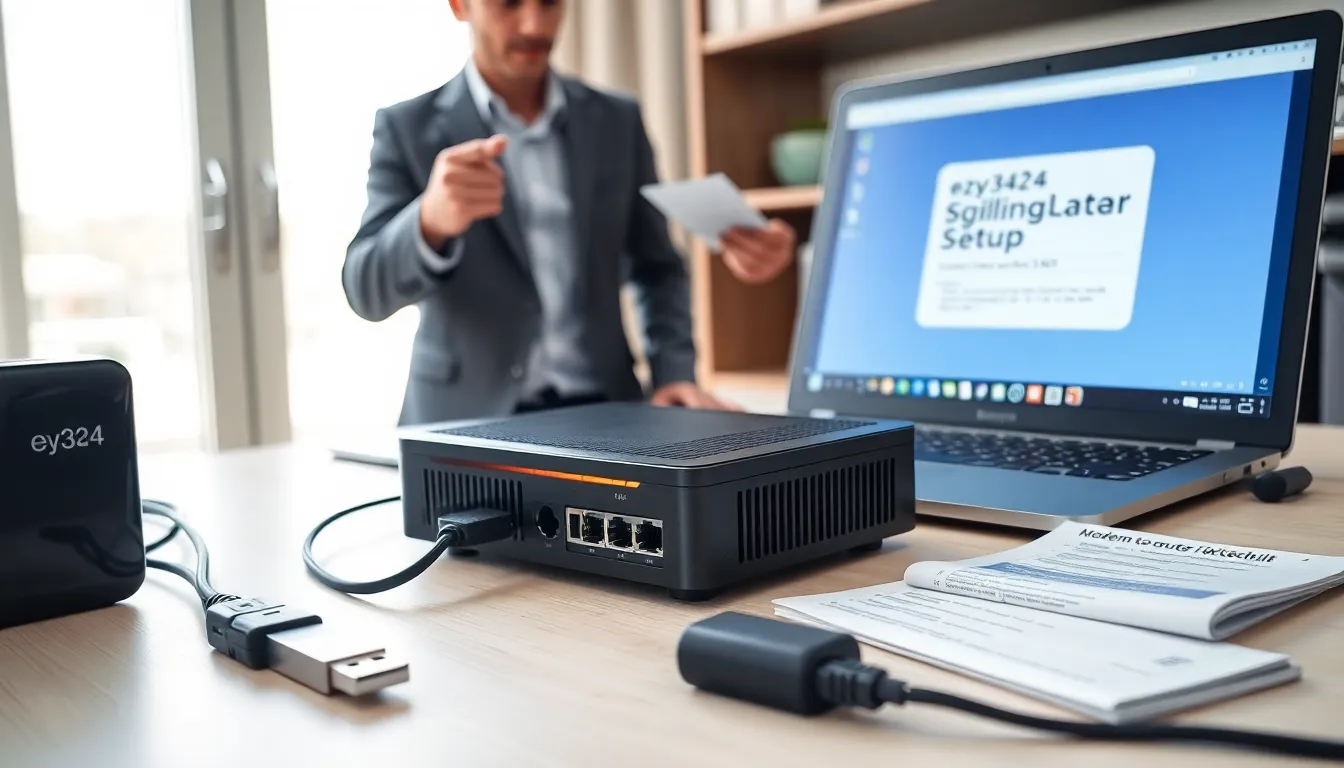

ezy3424 is a compact network device that serves small offices and home users. It connects devices, manages traffic, and offers simple security features. This guide explains what it is, how it works, and how to fix common issues.
Table of Contents
ToggleKey Takeaways
- The ezy3424 is a compact router‑switch ideal for small offices, remote workers, and simple home networks that need low cost and easy setup.
- During first‑time use, connect WAN to your modem, log into the device via the default IP, change the admin password, and enable DHCP or PPPoE as required by your ISP.
- If the ezy3424 has no internet, verify WAN connection type (DHCP vs PPPoE), reboot modem then router, and check for a second router causing IP conflicts.
- Expect up to ~300 Mbps NAT throughput on wired links and modest wireless performance—move the unit to a higher, open location and change channels to improve Wi‑Fi speeds.
- Buy from authorized resellers, confirm SKU (wired vs wireless), register for warranty, and download firmware only from the official support page to avoid bricking the device.
What The EZY3424 Is And Who It’s For
The ezy3424 is a small router and switch hybrid. It provides wired LAN ports, a WAN port, and basic wireless support. Manufacturers position it for users who want a low-cost, easy-to-manage network node. IT technicians use it for quick site setups. Home users use it for simple streaming, web browsing, and light file sharing.
The device targets budgets and straightforward needs. It lacks advanced enterprise tools, so network admins should not use it for large-scale deployments. It suits remote workers, small shops, and dorm rooms. The product focuses on physical reliability and simple controls. Buyers get a device that boots fast, uses little power, and fits on a shelf.
Core Features And Technical Specifications
The ezy3424 ships with four Gigabit LAN ports and one Gigabit WAN port. It includes a single dual-band wireless radio in some SKUs. The CPU runs at a modest clock rate and supports standard IP routing and NAT. The device uses 128 MB of flash and 256 MB of RAM in current models.
Key features include DHCP server, port forwarding, QoS basics, and a simple firewall. It supports IPv4 and limited IPv6 features. The wireless module supports 802.11ac on the 5 GHz band and 802.11n on 2.4 GHz where wireless is present. The device supports VLAN tagging on its wired ports but lacks a web UI for advanced VLAN rules in some firmware versions.
Power consumption stays under 10 W during typical use. The housing uses passive cooling and a single status LED strip. The product ships with a standard 12 V DC adapter. It supports external USB storage on certain revisions for basic file sharing and firmware updates.
Performance targets: the ezy3424 can handle up to 300 Mbps of sustained NAT throughput on wired connections. Wireless throughput varies by environment. The device works with common modem setups and most ISP configurations that use DHCP.
Step‑By‑Step Setup And First‑Time Use
Unbox the ezy3424 and inspect the unit and accessories. Connect the power adapter to the unit. Plug an Ethernet cable from the ISP modem into the WAN port. Attach a laptop to a LAN port with an Ethernet cable for initial setup.
Power on the device and wait for the LED to show a steady status. On the laptop, open a browser and enter the default IP address printed on the label. The setup page will prompt for a username and password. Use the default credentials from the quick start guide. Change the password immediately.
Set the device mode to router if it will sit behind a modem. Enable DHCP on the LAN if the laptop needs an IP automatically. If the ISP requires PPPoE, enter the username and password from the ISP. Configure the wireless SSID and passphrase. Choose WPA2 or WPA3 if the firmware offers it.
Save the settings and reboot the device when prompted. Verify internet access by loading a simple web page. Move the ezy3424 to its final location and plug in the modem and client devices. Test speed with a browser-based tool and compare to the ISP plan.
Common Problems And How To Fix Them
No internet after setup. The ezy3424 may not have correct WAN settings. It may use a static IP when the ISP needs DHCP or PPPoE. Check the WAN page and set the right connection type. Reboot the modem and the ezy3424 in sequence: modem first, then router.
Slow wireless speeds. The device may sit near interference or a thick wall. Move it to a higher, open spot. Change the wireless channel to a less crowded one. Confirm the client device supports the router radio band. Reduce simultaneous heavy transfers to see if speed improves.
LAN devices do not get IPs. The DHCP server may be disabled. Enable DHCP on the LAN page and set a proper address pool. Check for IP conflicts caused by another router on the network. Remove the extra router or set the ezy3424 to access point mode.
Firmware update failed. A failed update may corrupt settings. Reboot the device and attempt the update again from the support page. If the device fails to boot, use the recovery method in the manual. That method often requires a USB stick or a TFTP restore, depending on model.
Buying Advice, Support Options, And Compatibility Notes
Buy the ezy3424 from authorized resellers to keep warranty coverage. Check the SKU to confirm wired-only or wireless models. Verify the included power adapter and regional plugs. Compare the ezy3424 price to similar small routers with the same port count.
Check compatibility with the ISP modem. The ezy3424 works with most cable and DSL modems. It may not work as a modem replacement for fiber services that require an ONT. Confirm VLAN support when an ISP requires tagged VLAN for internet access.
Review support options before purchase. The manufacturer offers online documentation, firmware downloads, and a support form. Some retailers provide a 30-day return window. For business purchases, consider extended support plans when available.
Quick Setup Checklist
Confirm box contents. Gather login details from the ISP. Place the ezy3424 on a flat surface near the modem.
Network And Connectivity Issues
Check WAN type. Reboot modem then router. Verify cables and port selection.
Power And Performance Troubleshooting
Use the supplied adapter. Check the LED sequence. Reduce background transfers to test throughput.
Firmware, Drivers, And Software Updates
Download firmware from the official support page. Apply updates on wired connections. Follow recovery steps if an update fails.
Where To Buy And What To Look For
Buy from authorized dealers. Check SKU and included accessories. Read return and warranty terms.
Warranty, Support Channels, And Documentation
Register the device for warranty. Use the online knowledge base for guides. Contact support via the official form for hardware issues.