

In today’s fast-paced world, AI-driven economic models are transforming the way businesses and governments understand and navigate complex economic landscapes. Leveraging vast amounts of data and advanced algorithms, these models provide insights that were once unimaginable, enabling smarter decision-making and more efficient resource allocation.
As economies grapple with challenges like inflation, unemployment, and market volatility, AI offers a powerful tool to predict trends and optimize outcomes. By analyzing patterns and behaviors, AI-driven models can adapt in real-time, making them invaluable for strategic planning and risk management. The integration of artificial intelligence into economic forecasting is not just a trend; it’s a fundamental shift that’s reshaping the future of economic analysis.
Overview of AI-Driven Economic Models
AI-driven economic models leverage large datasets and sophisticated algorithms to analyze economic patterns and trends. These models enhance forecasting accuracy and decision-making effectiveness. By processing real-time data, AI identifies correlations and anomalies that traditional models might overlook.
AI incorporates machine learning techniques, enabling systems to learn from historical data. This continuous learning approach refines predictions, revealing insights about consumer behavior, market dynamics, and economic indicators. For instance, AI can assess price elasticity in various sectors, allowing businesses to adjust pricing strategies swiftly.
Governments utilize AI-driven economic models for macroeconomic planning and policy formulation. These models simulate different scenarios, providing insights into potential outcomes based on varying policy decisions. AI also enhances fiscal and monetary policies by predicting the impact of changes on inflation rates and unemployment levels.
The implementation of AI in economic modeling promotes efficiency in resource allocation. Businesses can optimize supply chain management by forecasting demand patterns with high precision. Additionally, financial institutions employ AI to assess credit risk, streamline loan approvals, and detect fraudulent activities.
Overall, AI-driven economic models signify a major advancement in economic analysis, providing tools that empower both businesses and governments in addressing contemporary economic challenges.
Key Components of AI-Driven Economic Models
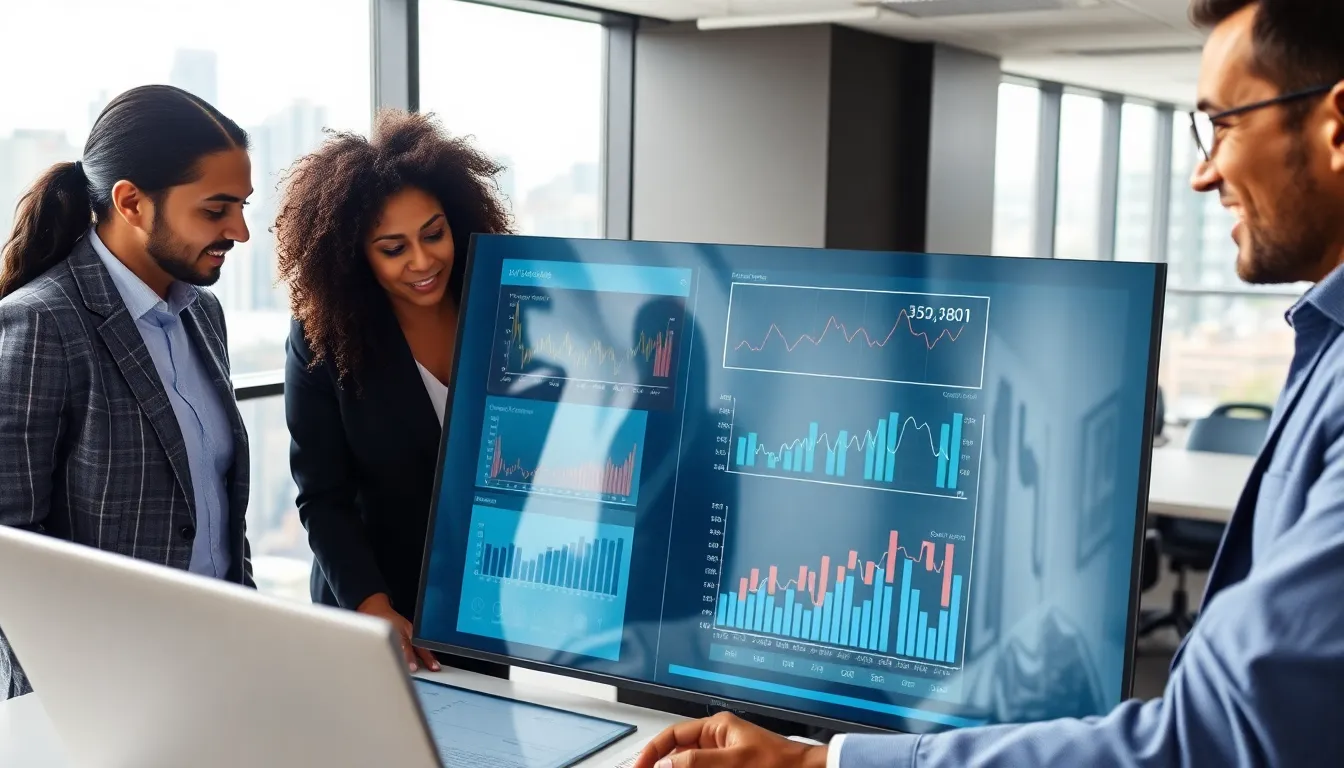
AI-driven economic models incorporate various components that enhance their effectiveness in analyzing and predicting economic trends. Machine learning techniques and data sources play critical roles in shaping the accuracy and reliability of these models.
Machine Learning Techniques
Machine learning techniques optimize data analysis by allowing models to learn from patterns within large datasets. Algorithms such as regression, clustering, and neural networks facilitate the understanding of complex economic relationships. Regression models predict future outcomes based on historical data. Clustering groups similar data points, enabling the identification of emerging trends. Neural networks mimic human brain processing, providing nuanced understanding of intricate economic behaviors. Each technique contributes to improved predictive capabilities, allowing businesses and governments to make informed decisions based on empirical evidence and insights.
Data Sources and Quality
Data sources significantly influence the reliability of AI-driven economic models. High-quality, diverse datasets enable more accurate predictions by reflecting real-world conditions. Sources include government databases, financial records, and consumer behavior data. Access to real-time information enhances model responsiveness to market changes. Quality assurance processes ensure data integrity, reducing the risk of flawed analysis. The combination of varied data sources and stringent quality measures leads to robust economic models that reflect current economic climates and forecast future trends effectively.
Applications of AI-Driven Economic Models
AI-driven economic models find extensive applications across various sectors, enhancing analysis and decision-making processes. Two significant areas include predictive analytics in market trends and improving decision-making in policy formulation.
Predictive Analytics in Market Trends
AI-driven economic models leverage predictive analytics to identify and forecast market trends. By analyzing historical data and real-time information, these models uncover patterns that inform businesses about consumer preferences and spending behavior. Retailers use AI to optimize inventory management by predicting demand fluctuations, while manufacturers adjust production schedules based on anticipated market shifts. Financial analysts apply AI algorithms to evaluate market volatility, improving investment strategies and risk assessments. Ultimately, predictive analytics leads to more informed business strategies, reducing inefficiencies and enhancing profitability.
Enhancing Decision-Making in Policy
AI-driven economic models significantly enhance decision-making in policy formation. Governments utilize these tools to simulate various economic scenarios, evaluating potential impacts of different policy choices. By analyzing vast amounts of data, AI models offer insights into economic indicators and societal effects, enabling informed discussions among policymakers. For instance, during economic downturns, these models help identify effective stimulus measures by predicting their effects on unemployment and growth rates. Additionally, AI assists in resource allocation decisions, ensuring that funds are directed toward areas that yield the highest economic benefits. This data-driven approach fosters transparency and adaptability in policymaking processes, driving more effective governance.
Challenges and Limitations of AI-Driven Economic Models
AI-driven economic models face several challenges and limitations that impact their effectiveness and reliability. Understanding these obstacles is essential for organizations utilizing these models.
Ethical Considerations
Ethical considerations play a vital role in the deployment of AI-driven economic models. Algorithms might reinforce existing biases if trained on flawed data. They could potentially lead to discriminatory practices, particularly in credit scoring and employment decisions. Ensuring algorithmic fairness and transparency remains a priority. Organizations need to implement rigorous testing procedures to assess the ethical implications of their models.
Data Privacy Concerns
Data privacy concerns arise as AI-driven economic models rely heavily on vast amounts of personal and financial data. The collection and storage of this information increase the risk of data breaches and unauthorized access. Compliance with regulations like the General Data Protection Regulation (GDPR) is crucial. Organizations must prioritize data security measures and establish clear protocols for data usage, ensuring consumer trust while leveraging AI insights.
Future of AI-Driven Economic Models
AI-driven economic models continue to evolve, poised to reshape economic analysis and policy formulation. Upcoming advancements promise to enhance predictive accuracy and broaden the application of these models across various sectors.
Innovations on the Horizon
Innovations in AI-driven economic models include the application of advanced machine learning techniques, such as reinforcement learning and deep learning. These technologies enhance real-time data processing, enabling more precise predictions of economic fluctuations. Quantum computing may further revolutionize these models by vastly increasing computational power, allowing for the analysis of complex datasets. Additionally, natural language processing (NLP) facilitates the extraction of insights from unstructured data sources, such as news articles and social media, enriching the analytical capabilities of economic models. Collaborative frameworks using decentralized data sharing can promote transparency and improve model performance by providing access to diverse datasets across industries.
Integration with Traditional Economic Theories
Integration of AI-driven economic models with traditional economic theories creates a comprehensive analytical framework. Incorporating classical theories such as supply and demand with modern machine learning techniques improves understanding of market dynamics. Traditional macroeconomic models benefit from AI’s ability to analyze vast amounts of data, enhancing their predictive power and adaptability to real-time changes. This synergy enables policymakers to simulate multiple economic scenarios, ensuring more nuanced decision-making. Furthermore, the combination of AI insights with established economic principles fosters a more holistic approach to policy formulation, allowing governments and businesses to respond effectively to economic challenges.
AI-driven economic models represent a revolutionary shift in how businesses and governments approach economic challenges. By harnessing advanced algorithms and vast data, these models provide deeper insights that enhance decision-making and resource allocation. As the landscape of economic forecasting evolves, the integration of AI technologies will continue to refine predictions and improve efficiency across various sectors.
While potential challenges like ethical concerns and data privacy must be addressed, the benefits of AI-driven models are undeniable. They offer a pathway to more informed governance and strategic business practices. As innovations in AI technology progress, the future holds promising opportunities for further enhancing economic analysis and policy formulation.