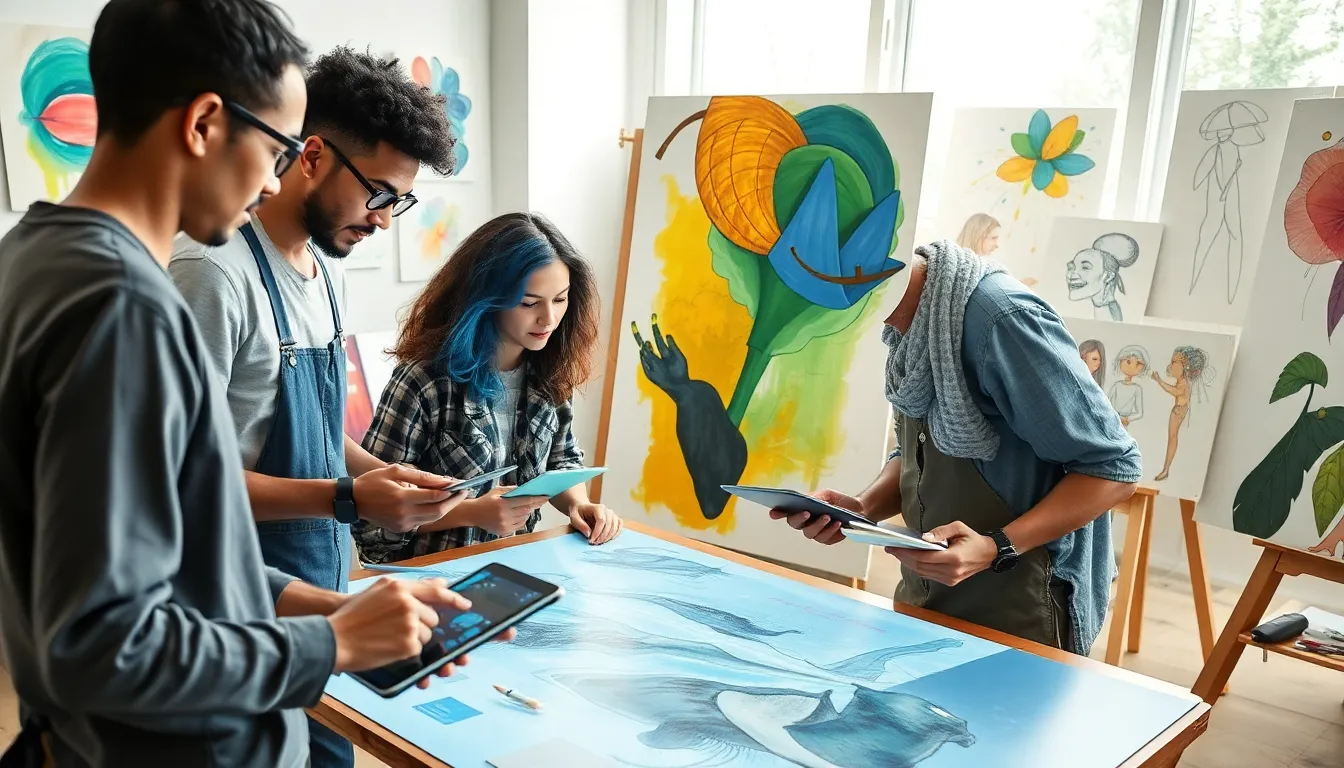

In a world where technology and artistry collide, AI-driven creativity is transforming how ideas come to life. From generating stunning visuals to composing captivating music, artificial intelligence is proving itself as a powerful collaborator in the creative process. This innovative synergy not only enhances human creativity but also challenges traditional notions of authorship and originality.
As artists and creators embrace AI tools, they’re discovering new ways to push boundaries and explore uncharted territories. The fusion of human intuition and machine learning opens up endless possibilities, making the creative landscape more dynamic than ever before. This article delves into the fascinating ways AI is reshaping creativity and the implications it holds for the future of artistic expression. Even on a smaller scale, you can tap into this blend of tech and creativity when you create your own meme, showing how simple tools can spark fresh forms of expression.
Understanding AI-Driven Creativity
AI-driven creativity encompasses the use of artificial intelligence as a tool to augment human artistic capabilities. This collaboration reshapes the creative landscape, offering new avenues for exploration and expression.
Definition of AI-Driven Creativity
AI-driven creativity defines the intersection where technology and artistic innovation meet. It involves employing machine learning algorithms and other AI technologies to assist in generating creative outputs. Examples include AI tools creating visual art, composing music, or writing literature, all while reflecting input from human artists. This synergy enables creators to experiment with ideas and concepts beyond traditional boundaries.
Importance of AI in the Creative Process
AI plays a critical role in enhancing the creative process in several ways.
- Idea Generation: AI algorithms can analyze vast datasets to uncover trends and generate novel ideas for artists to consider.
- Collaboration: AI acts as a collaborator, providing suggestions or completing artistic pieces based on parameters set by the creator.
- Efficiency: AI streamlines repetitive tasks, allowing artists to focus on higher-level creative thinking.
- Accessibility: AI tools democratize creativity, enabling individuals without formal training to produce art and music.
- Innovation: AI encourages experimentation, leading to unique artistic styles and forms that might not emerge solely through human effort.
By integrating AI into creative workflows, artists can expand their potential, challenge conventional norms, and redefine the essence of authorship in artistic endeavors.
Applications of AI-Driven Creativity
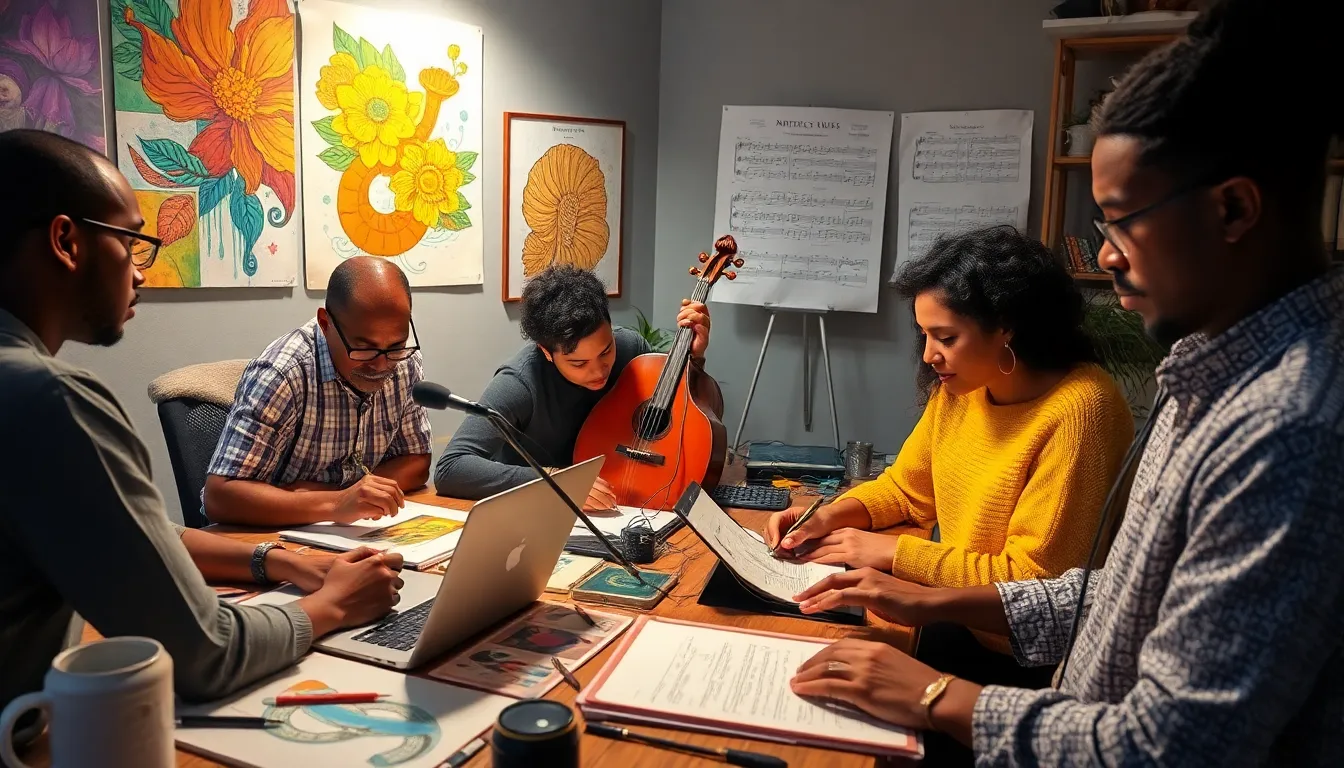
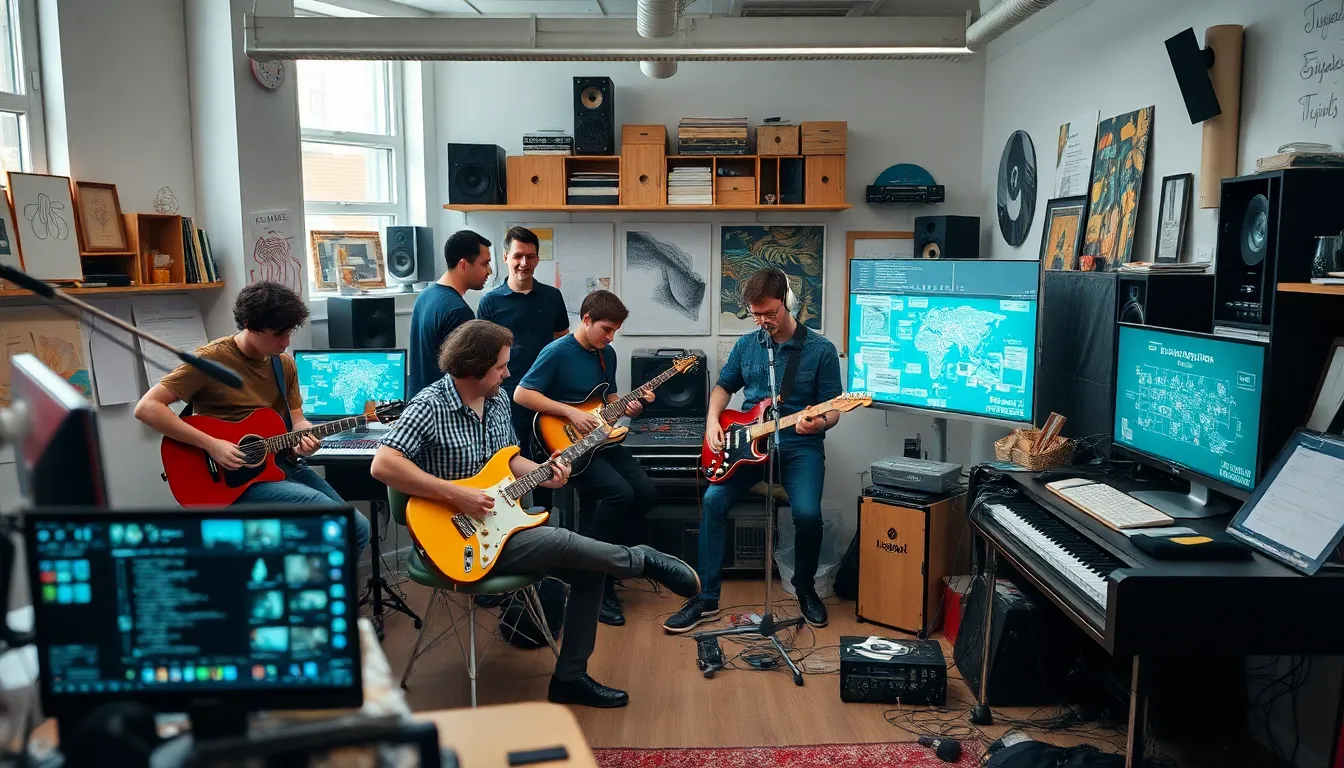
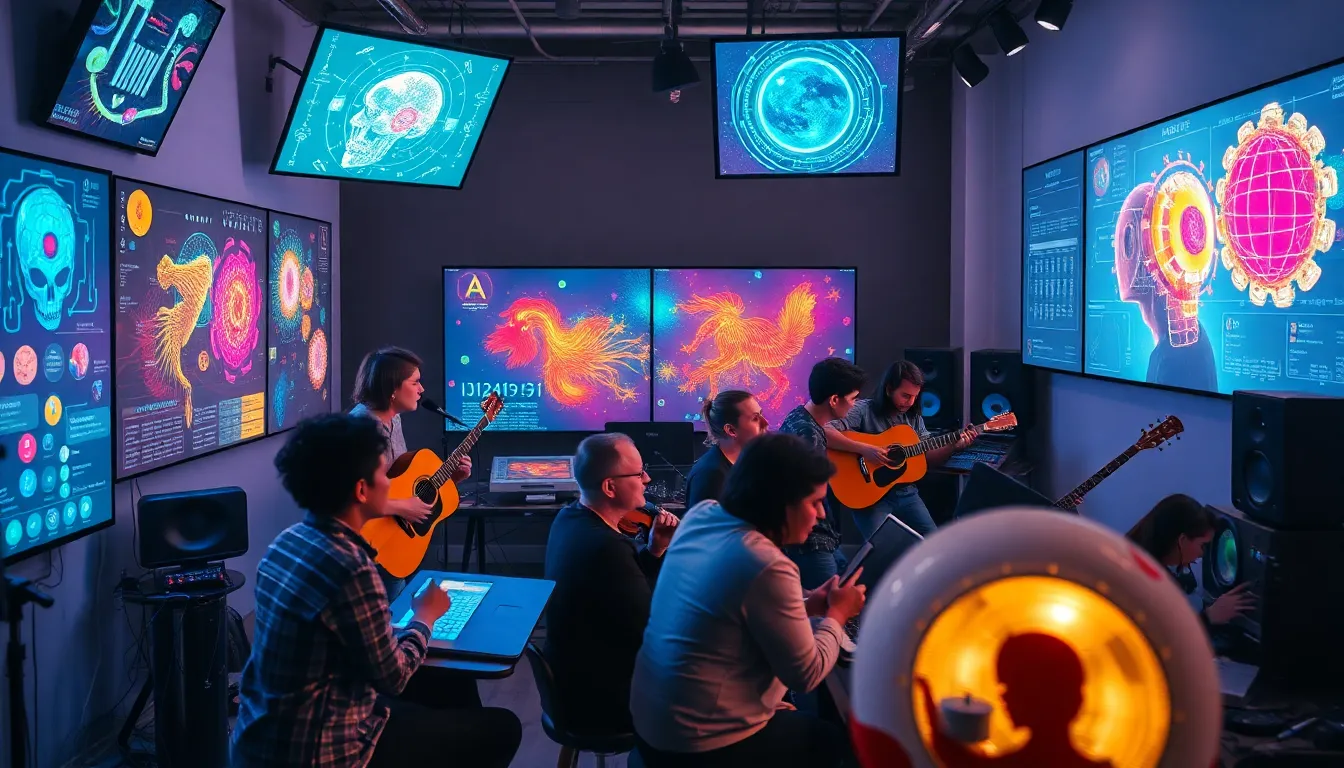
AI-driven creativity manifests across various artistic domains, empowering creators with innovative tools to enhance their work. The applications include music composition, visual arts, and writing, each of which benefits from AI’s capabilities.
Music Composition
AI tools assist musicians in generating compositions, exploring novel sounds, and arranging musical pieces. Companies like Jukedeck and Amper Music provide platforms where users can create original music tracks, customizing elements such as genre and mood. Algorithms analyze vast datasets of existing music to identify patterns, resulting in unique melodies and harmonies. Through machine learning, AI can also adapt to an artist’s style, offering suggestions that align with their creative vision.
Visual Arts
In visual arts, AI algorithms generate images, assist in design, and enhance artistic processes. Tools like DeepArt and DALL-E utilize neural networks to transform ideas into compelling visuals. Artists input images or concepts, and the AI produces variations that inspire new directions. This collaboration fosters experimentation with styles and techniques, allowing creators to break conventional boundaries. Moreover, AI facilitates art curation, identifying trends and suitable artworks for exhibits based on audience preferences.
Writing and Content Creation
AI also plays a significant role in writing and content creation, streamlining the process while enhancing creativity. Programs like OpenAI’s GPT-3 generate text, aiding authors in brainstorming ideas, drafting articles, or completing outlines. These AI systems analyze writing patterns and styles, creating content that mimics human expression. Additionally, AI tools assist in editing and proofreading, ensuring clarity and coherence. By integrating AI into writing workflows, creators can focus more on conceptual development, resulting in richer narratives.
Benefits of AI-Driven Creativity
AI-driven creativity provides numerous advantages that expand the horizons of artistic expression. This technology not only enhances human creativity but also boosts efficiency, allowing artists to achieve more in less time.
Enhancing Human Creativity
AI augments human creativity by serving as a collaborative partner. Through advanced algorithms, it generates unique ideas, offering artists fresh perspectives. For example, AI-driven platforms analyze existing works and suggest novel concepts, enabling creators to explore styles and themes that might not have been considered. Artists like Refik Anadol use AI to blend art and data, resulting in immersive experiences that redefine traditional art forms. This collaboration enriches the creative process, encouraging more profound exploration and innovation.
Efficiency and Speed
AI reduces the time needed to produce creative outputs significantly. It automates repetitive tasks such as editing or style matching, allowing artists to focus on core creative activities. Tools like Runway ML and Artbreeder facilitate quick iterations, streamlining workflows in visual arts and design. In music, platforms like AIVA generate compositions rapidly, enabling musicians to develop tracks more efficiently. By increasing productivity and minimizing the manual effort required for routine tasks, AI empowers creators to produce high-quality work at a faster pace.
Challenges of AI-Driven Creativity
AI-driven creativity presents several challenges that must be addressed to optimize its integration into artistic processes.
Ethical Considerations
Ethical considerations emerge as AI technology influences creative fields. Concerns revolve around authorship, ownership, and attribution of AI-generated works. Questions arise about whether the artist, the AI, or both share responsibility for creative outputs. Furthermore, the potential for bias in AI algorithms can result in homogenized outputs, limiting diversity in artistic expression. As AI-generated content increases, maintaining transparency in how AI contributes to creativity becomes crucial for fostering trust within artistic communities.
Quality vs. Quantity
Quality versus quantity remains a significant challenge in AI-driven creativity. While AI tools can generate high volumes of content quickly, the depth and richness of artistic expression may suffer. Rapid production risks leading creators to prioritize speed over the emotional and conceptual quality that defines impactful art. Additionally, an oversaturation of AI-generated content could dilute originality, raising questions about the true value of artistic works and challenging audiences to differentiate between authentic creativity and algorithmically derived content.
Future of AI-Driven Creativity
The future of AI-driven creativity presents exciting opportunities and challenges for artists and creators. Emerging trends and innovations will shape the landscape of artistic expression in profound ways.
Trends to Watch
- Increased Collaboration: Artists increasingly collaborate with AI systems, blending human intuition with machine efficiency. This partnership fosters unique artistic outputs that challenge traditional forms.
- Personalization: AI tools enable personalized art experiences, tailoring outputs to user preferences. This shift enhances audience engagement by making art more relevant to individual tastes.
- Adaptive Algorithms: Continuous development of adaptive algorithms allows AI to learn from feedback. This evolution enhances its ability to generate more nuanced and complex creative works over time.
- Integration of Augmented Reality: The combination of AI and augmented reality (AR) offers immersive artistic experiences. Artists can create interactive environments that combine digital and physical art forms.
- Expansion of Creative Industries: AI’s integration expands beyond traditional art forms into sectors like advertising, fashion, and gaming. This expansion demonstrates how AI-driven creativity permeates various industries.
Potential Innovations
- Enhanced Creative Tools: Future AI tools will deliver sophisticated features, further improving artists’ workflows. Enhanced functionalities in software may streamline tasks like ideation and execution, fostering creativity.
- AI-Driven Soundscapes: Innovations in AI-generated music will redefine sound design, allowing for real-time composition that reacts to user interactions. Such advancements will create dynamic musical experiences.
- Generative Pre-trained Models: The development of generative models promises unprecedented levels of creative output, aiding artists in producing diverse styles and formats based on minimal input.
- Ethical AI Frameworks: Establishing ethical frameworks around AI creativity will drive responsible use. Clear guidelines will address issues of authorship, ownership, and the balance of human and AI contributions.
- Cross-disciplinary Collaborations: Artists from various disciplines are likely to collaborate with AI developers, merging technology with art forms like performance, literature, and digital design. This cross-pollination will lead to groundbreaking projects and innovations.
AI-driven creativity stands poised to redefine artistic boundaries, offering numerous opportunities for exploration and collaboration within the creative landscape.