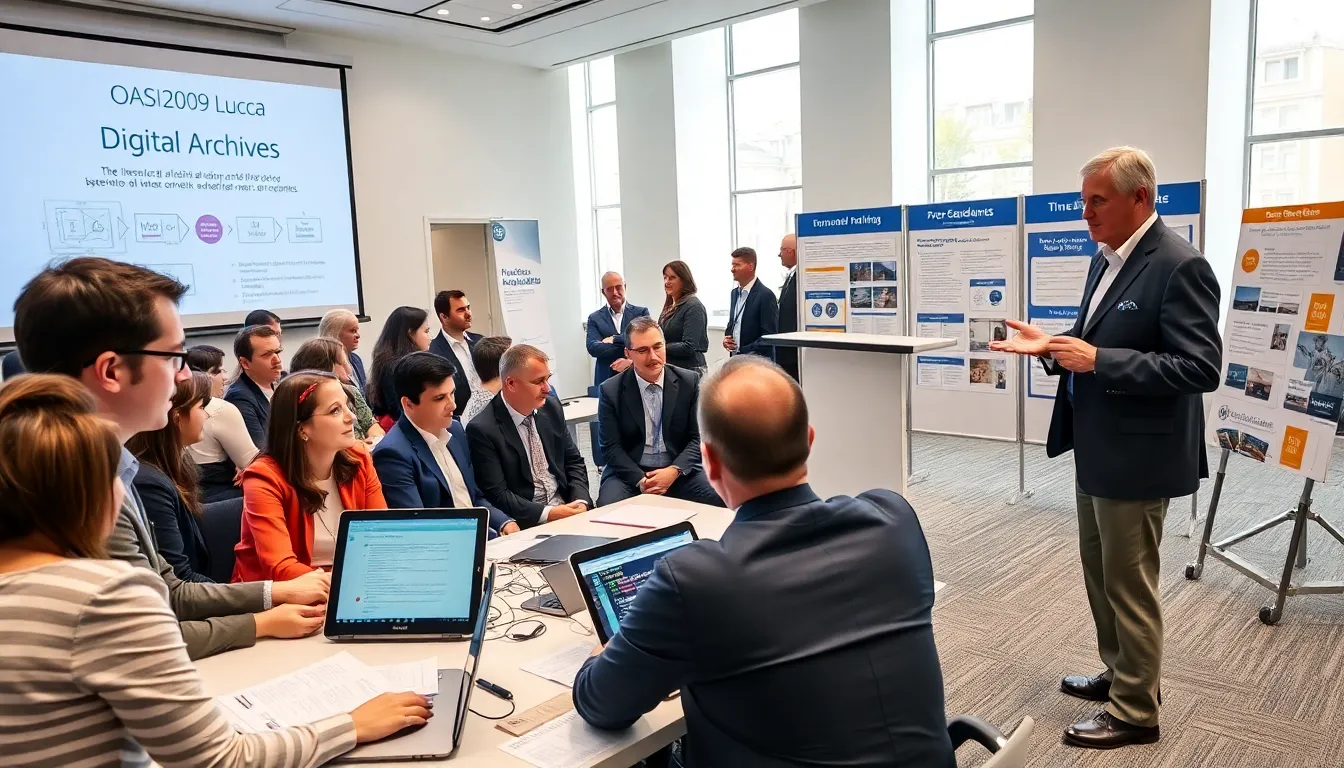

OASI2009Lucca was a focused conference on data, archives, and information systems. The event drew researchers, archivists, and technologists. The conference offered talks, posters, and workshops. This article outlines the event and its lasting effects.
Table of Contents
ToggleKey Takeaways
- OASI2009Lucca showcased practical workflows and tools that archivists can adapt immediately for cost-effective digitization and preservation.
- The conference proceedings and multimedia from OASI2009lucca provide reusable templates, checklists, and workshop materials valuable for training and course use.
- OASI2009Lucca bridged research and practice by promoting lightweight, repeatable workflows and metadata interoperability that support long-term access.
- Follow-up pilot projects from OASI2009Lucca led to regional programs and collaborative grant proposals, showing how small tests scale into sustained services.
- Archivists, librarians, and local government staff should consult OASI2009Lucca case studies to inform policy, migration strategies, and hands-on staff training.
What OASI2009Lucca Was And Why It Mattered
OASI2009Lucca was an international meeting that focused on archives, information systems, and digital access. It drew experts from Europe and beyond. Attendees discussed standards, preservation, and practical tools. The event mattered because it linked academic research to public archives. It helped archivists adopt digital workflows and researchers test new tools. OASI2009Lucca also created a forum for pilot projects. Those projects later informed local and regional archive plans. The conference offered a clear place for exchange. It offered practical guidance and peer review. OASI2009Lucca so played a role in shaping local archive practices and wider research agendas.
Historical Context And Organization
Organizers planned OASI2009Lucca against a backdrop of growing digital records. Institutions faced rising volumes of born-digital files. They also faced gaps in standards and training. The organizing committee included librarians, university staff, and local archive managers. Sponsors provided funding for travel grants and student participation. Program chairs selected peer-reviewed submissions. The review process followed a clear schedule. The committee published a program booklet and a proceedings volume. The event used a mix of invited talks and contributed papers. Local archive staff helped with logistics and outreach. They also arranged site visits to nearby collections. The structure gave attendees both theory and hands-on practice. OASI2009Lucca hence balanced research and application.
Program Highlights And Key Sessions
The program of OASI2009Lucca offered sessions on standards, metadata, and preservation. It included case studies from municipal archives and university projects. Panels examined legal issues and access policies. Workshops trained attendees on tools and workflows. The program favored short, focused presentations. The format let attendees sample many topics and join deep sessions. Organizers scheduled poster sessions to display early-stage work and pilot systems.
Notable Speakers, Presentations, And Workshops
Speakers included senior archivists and computer scientists. Presentations covered metadata crosswalks and preservation planning. Workshops taught digital imaging and file format identification. One workshop guided attendees in creating simple preservation policies. Another workshop showed command-line tools for batch processing. Presenters shared concrete results and tested scripts. Attendees left with templates, checklists, and example code. Those materials helped local archive teams carry out changes quickly.
Major Themes And Research Trends Covered
Major themes at OASI2009Lucca included metadata interoperability, digitization quality, and long-term access. Researchers explored automated metadata extraction and simple migration strategies. Practitioners discussed cost-effective digitization and staffing models. A trend emerged toward lightweight, repeatable workflows. Speakers emphasized testing small tools on real collections. They also stressed documentation and training for staff. The themes reflected a shift from single projects to ongoing services.
Venue, Dates, And Local Setting In Lucca
OASI2009Lucca took place in Lucca, a city with rich cultural heritage. The conference occurred over three days in late spring. Organizers chose a central conference venue near historic sites. The venue provided lecture rooms, poster space, and a small exhibition area. The local setting let attendees visit municipal archives and libraries. Local staff arranged short guided visits and demonstrations. The setting gave attendees direct views of archive buildings and storage areas. The small city size made travel simple and allowed friendly local interactions.
Travel, Accommodation, And Practical Tips For Attendees
Attendees typically flew into Pisa or Florence and then took a train to Lucca. The train ride took thirty to sixty minutes. Hotels clustered near the conference hall and the historic center. Organizers offered a list of recommended hotels at various price points. They also provided information about local buses and taxis. Attendees were advised to bring adapters for European outlets and a light jacket for spring evenings. For hands-on workshops, attendees were advised to bring a laptop and a USB stick. The event ran on a tight schedule, so punctuality helped attendees join sessions on time.
How To Access Archives, Proceedings, And Multimedia
Organizers archived the proceedings and made them available after the event. They posted slides and select video recordings. Researchers and students can access the materials via the conference website or a university repository. The proceedings list contained abstracts, papers, and author contact information. The multimedia items included recorded talks and short workshop demos. Some items required institutional login or permission from authors. Users can request copies from authors when materials remain restricted. Librarians recommended citing the proceedings and linking to the repository for long-term access.
Impact, Follow‑Up Projects, And Lasting Legacy
OASI2009Lucca sparked follow-up projects in digitization and training. Project teams formed to test open-source tools on local collections. Several pilot projects expanded into regional programs. Participants published follow-up papers and case studies. Training materials from the workshops found repeated use in archives courses. Some institutions updated workflows after testing practices at the event. The event also helped create informal networks. Those networks led to future collaborations and joint grant proposals. The legacy of OASI2009Lucca so shows in concrete projects and in continuing professional ties.
Who Should Care About OASI2009Lucca Today
Archivists and information managers should study OASI2009Lucca for practical methods and case studies. Researchers should study the proceedings for early examples of applied work. Librarians and university staff should review the training materials for course use. Local government staff can use the event reports to plan digitization projects. Students can use the slides and workshop templates as learning tools. Anyone building small-scale preservation services may find useful checklists and workflows. OASI2009Lucca remains a useful reference for those who work with digital records and access projects.