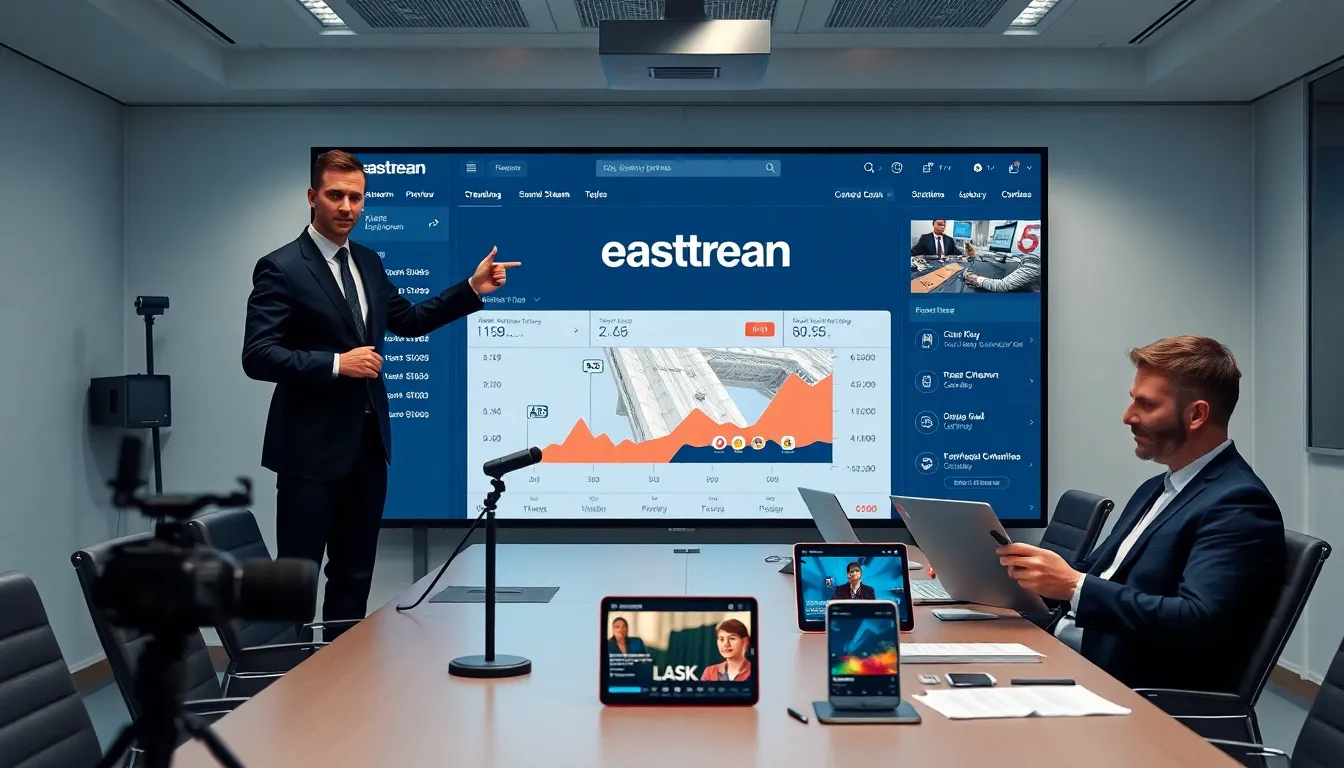

eaststreans offers a simple way to stream live video and manage channels. The platform lets users send video, control access, and monitor streams. This introduction gives a clear view of what eaststreans does and who will use it.
Table of Contents
ToggleKey Takeaways
- Eaststreans provides an easy-to-use live streaming platform with low-latency HLS output, RTMP input, adaptive bitrate, and built-in recording for creators, events, and small businesses.
- Sign up, create a channel, and paste your stream key into any RTMP-capable encoder to preview, schedule, and start broadcasts via the eaststreans dashboard or API.
- Use the RESTful API to automate stream creation, attach metadata, retrieve archived recordings, and integrate eaststreans into web or mobile apps for developer workflows.
- Protect streams with stream keys, token authentication, and signed URLs, rotate keys after major events, and store sensitive recordings encrypted to reduce security risk.
- Test streams beforehand, choose bitrates that match upload speeds, monitor analytics for viewer behavior, and archive older content to manage viewing-hour and storage costs.
What Eaststreans Is And Who It’s For
eaststreans is a streaming service that sends live video to viewers. The platform supports single-camera and multi-camera broadcasts. It also supports scheduled streams and recorded playback. The team built eaststreans for small creators, community groups, and businesses. They wanted a tool that lowers cost and speeds setup.
Creators use eaststreans to reach audiences on web pages and mobile apps. Event organizers use eaststreans to broadcast talks and classes. Small businesses use eaststreans for product demos and internal training. The platform fits users who need simple setup, steady performance, and clear controls.
The company provides a web dashboard and API. The dashboard lets users start a stream, change titles, and view metrics. The API lets developers automate workflow and add streaming to custom apps. The feature mix makes eaststreans useful for both nontechnical users and developers.
eaststreans focuses on ease of use and predictable costs. The product targets users who want streaming without heavy infrastructure. It also targets teams that want moderate control without deep technical work.
Key Features And Capabilities
eaststreans delivers live streaming, recording, and playback. The platform encodes video and sends it to viewers with low latency. It provides adaptive bitrate to match viewer bandwidth. The service stores recordings so users can replay sessions later.
The dashboard shows viewer counts, stream health, and bitrate graphs. Users can set stream titles, descriptions, and thumbnail images. They can enable chat and live polls. eaststreans also supports stream keys and secure links for private broadcasts.
eaststreans provides API endpoints for stream creation, status checks, and recording retrieval. Developers can call the API to start streams, attach metadata, and fetch archived files. The API uses standard REST patterns and JSON data. Developers can add eaststreans to websites, mobile apps, and backend systems.
eaststreans supports common streaming protocols. The platform accepts RTMP input and outputs HLS for most players. It also offers direct embeds and SDKs for web and mobile players. The service scales to hundreds of concurrent viewers for a single channel and to larger audiences with plan upgrades.
The company offers analytics that break down viewer location, watch time, and device type. The analytics help teams measure engagement and plan follow-up content. The monitoring tools send alerts when stream health drops or when viewers spike.
How To Get Started With Eaststreans
They sign up on the eaststreans site to start a trial. The sign-up process asks for name, email, and a password. The new user then creates a channel and gets a stream key.
They install a streaming app or use a browser encoder. The platform accepts RTMP, so common encoders work. The user enters the stream key into the encoder and sends video to eaststreans.
They preview the stream in the dashboard. The preview shows video, audio levels, and latency. The user sets a title and schedule if needed. Then they start the public or private broadcast.
They check analytics after the stream. The dashboard shows viewer counts, average watch time, and device breakdown. The user can download recordings and share links. The API can automate uploads of recordings to storage or content management systems.
For teams, eaststreans provides role-based access. An admin creates subaccounts and assigns roles. The admin sets limits on who can start streams and who can view analytics. This setup helps businesses control who manages content.
Practical Tips, Risks, And Alternatives
They test the stream before going live. A short test reveals audio or bitrate problems. They choose a bitrate that fits their upload speed and audience bandwidth. They set a backup encoder or connection to reduce interruption.
They secure streams with keys and private links. eaststreans supports token authentication and signed URLs. They rotate keys after a major event to reduce risk. They also keep recorded files in encrypted storage when the files contain sensitive content.
They monitor costs by selecting the right plan. eaststreans charges by viewing hours and storage. Teams estimate monthly watching time and storage needs to avoid surprises. They archive older recordings to cheaper storage to lower bills.
They review privacy and copyright rules before streaming music or clips. eaststreans offers settings to restrict downloads and embeds. They use those controls when content has licensing limits.
Alternatives include larger CDN-based stream platforms and open-source server setups. Each alternative gives different trade-offs. CDN platforms give wide distribution and global caching. Open-source setups give full control but need server management.
They pick eaststreans when they want simple setup, clear pricing, and developer APIs. They pick a CDN service when they need extremely large scale and global edge caching. They pick self-hosted solutions when they need full control of the stack.
Frequently Encountered Issues And Quick Fixes
They lose audio during a stream when the encoder mutes. Fix: Check audio input, confirm levels, and restart the encoder. They see pixelation when upload speed drops. Fix: Lower the encoder bitrate or switch to a wired connection. They get authentication errors when the stream key is wrong. Fix: Copy the key from the dashboard and paste it into the encoder. They face playback delay for some viewers. Fix: Verify HLS segment size and reduce segment length if needed. They find recording missing after a stream. Fix: Check storage quota and recording settings in the dashboard.